
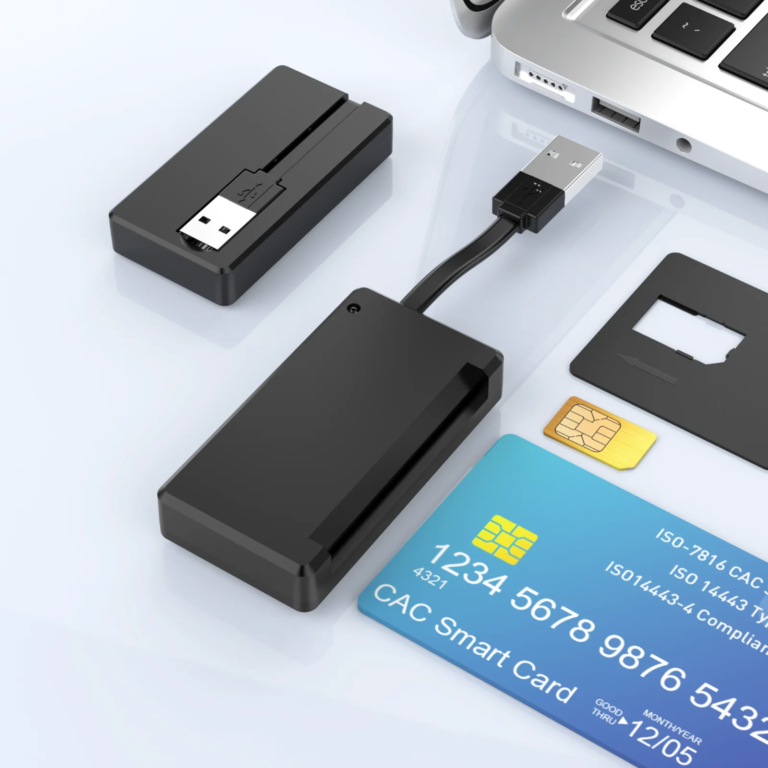
Our client is a leading provider of medical equipment solutions, specializing in developing portable diagnostic devices for clinical settings in United States. They required a custom smart card reader to integrate with their proprietary Android-based tablet, creating a seamless workflow for medical professionals to access patient data, verify equipment calibration, and record diagnostic results. The smart card reader needed to meet the strict reliability and compatibility requirements of the medical industry, as well as support custom SDK development for integration with the client’s existing medical software system.
Given the critical nature of medical applications, the client prioritized supplier reliability and R&D capabilities, initially approaching multiple manufacturers to evaluate their technical competence.
The project faced a series of challenges, from initial trust-building to technical iterations, all within the context of strict medical industry standards:
Rocketek adopted a “collaborative, transparent, and agile” approach to address each challenge, prioritizing open communication and technical precision:
1. Building Trust Through Transparency and Proof
– Virtual R&D team showcase: We organized a live video conference for the client, inviting our senior R&D engineers to present our experience in custom PCBA development for industrial and medical-related applications. We shared detailed case studies (including a smart card reader integrated with hospital self-service terminals) and demonstrated finished products, highlighting our compliance with industry quality standards.
– On-site factory visit arrangement: We hosted the client’s technical team for an on-site visit to our Dongguan manufacturing base. We provided a comprehensive tour of our R&D lab, SMT workshop, and quality control center, explaining our production processes (including ISO 9001:2015 quality management system implementation) and showcasing our testing capabilities for medical-grade accessories. We also arranged one-on-one meetings between our engineers and the client’s team to address technical questions in real time.
2. Resolving PD Port Charging Issue
Our engineers conducted in-depth analysis of the charging failure and identified the root cause as a mismatch between the PD chip’s output protocol and the client’s 5V2A devices. We implemented the following solution:
– Online collaborative debugging: We organized a joint video meeting with the client’s engineering team to review the charging circuit design and device compatibility requirements. Our team proposed modifying the PD chip’s firmware to add a dedicated 5V2A output mode, ensuring compatibility with standard peripheral devices.
– Rapid PCBA iteration: We adjusted the firmware and optimized the charging circuit layout on the PCBA, delivering revised samples within 5 working days. We also provided detailed test reports (including charging current stability and voltage drop data) to verify the solution’s effectiveness.
3. Optimizing Power Management for Reuse Switch
To address the reuse switch failure when the tablet was powered off, our team redesigned the power management module:
– Smart power activation design: We added a small backup power storage unit to the PCBA, which could supply temporary power to the reuse switch when the tablet’s battery was depleted. This allowed the switch to activate the card reader and trigger the tablet’s emergency power-up function.
– Low-power consumption optimization: We optimized the circuit design to ensure the backup power unit consumed minimal energy, extending its standby time to 30 days without recharging. We also conducted rigorous testing in various temperature environments (-10°C to 40°C) to ensure reliability in clinical settings.
4. Flexible Response to Ad-Hoc Modifications
For the client’s additional ad-hoc requirements, we assigned a dedicated project manager to coordinate communication between our R&D, production, and quality control teams:
– We added AES-256 data encryption to the PCBA design to ensure the security of patient information, complying with medical data protection regulations.
– We modified the card reader’s housing design to include a dust-proof seal around the card slot, meeting the IP54 dust-proof standard for clinical environments.
– Throughout the process, we provided weekly progress updates and invited the client to review each iteration, ensuring alignment with their expectations.
After 4 rounds of sample iterations and close collaboration, the project achieved complete success:
This case exemplifies Rocketek’s ability to deliver tailored, high-reliability solutions for specialized industries, leveraging our R&D expertise and collaborative approach to overcome complex technical challenges.