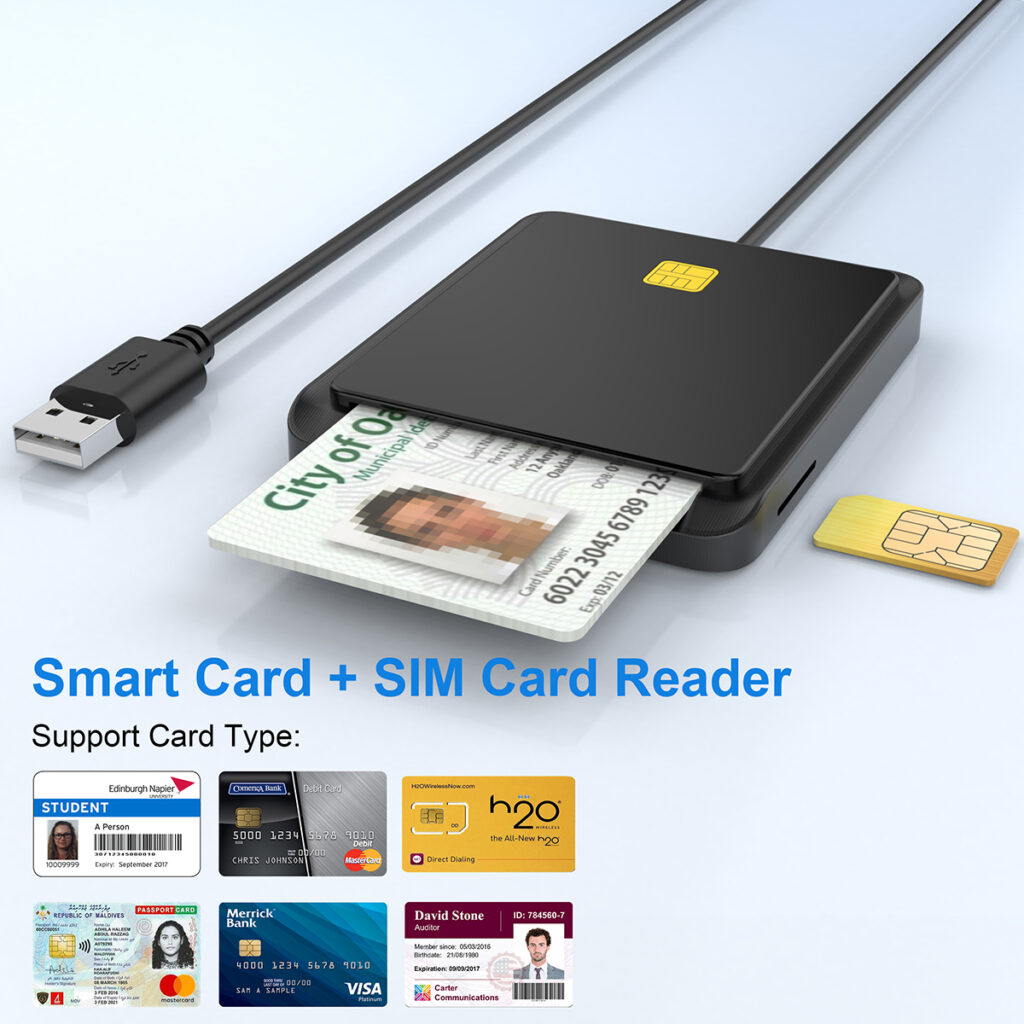
The reasons why most smart card reader is only USB2.0 but not USB3.0 are below
USB 3.0 interfaces are widely adopted by memory card readers for large file transfers. By contrast, USB 2.0 remains the dominant option for professional smart card readers, commonly deployed in banking, access control and commercial sectors.
Smart cards feature low inherent reading speed. USB 2.0 bandwidth can perfectly cover daily data exchange demands. Upgrading to USB 3.0 brings no real performance improvement and merely creates redundant transmission capacity.
Signal stability is another key consideration. High-frequency USB 3.0 signals may cause electromagnetic interference, resulting in unsteady card detection and delayed response. USB 2.0 boasts strong resistance to interference and ensures consistent performance in diverse working environments.
USB 2.0 features streamlined and well-developed structure, fitting standard product design effortlessly. It offers excellent compatibility with mainstream operating systems. The plug-and-play design effectively lowers connection errors and usage obstacles.
USB 3.0 is only applied on few multi card readers to support fast memory card access. With balanced practicality and dependable performance, USB 2.0 will continue to be the preferred standard for professional smart card readers.